
Fermented Fat and Oil: from Nutritional Function to Production and Regulatory Consideration
Fermented Fat and Oi
Keywords:
Consumer acceptance, Fermented fats and oils, Oleaginous microorganisms, Precision fermentation, Structured lipids, Sustainable food ingredientsAbstract
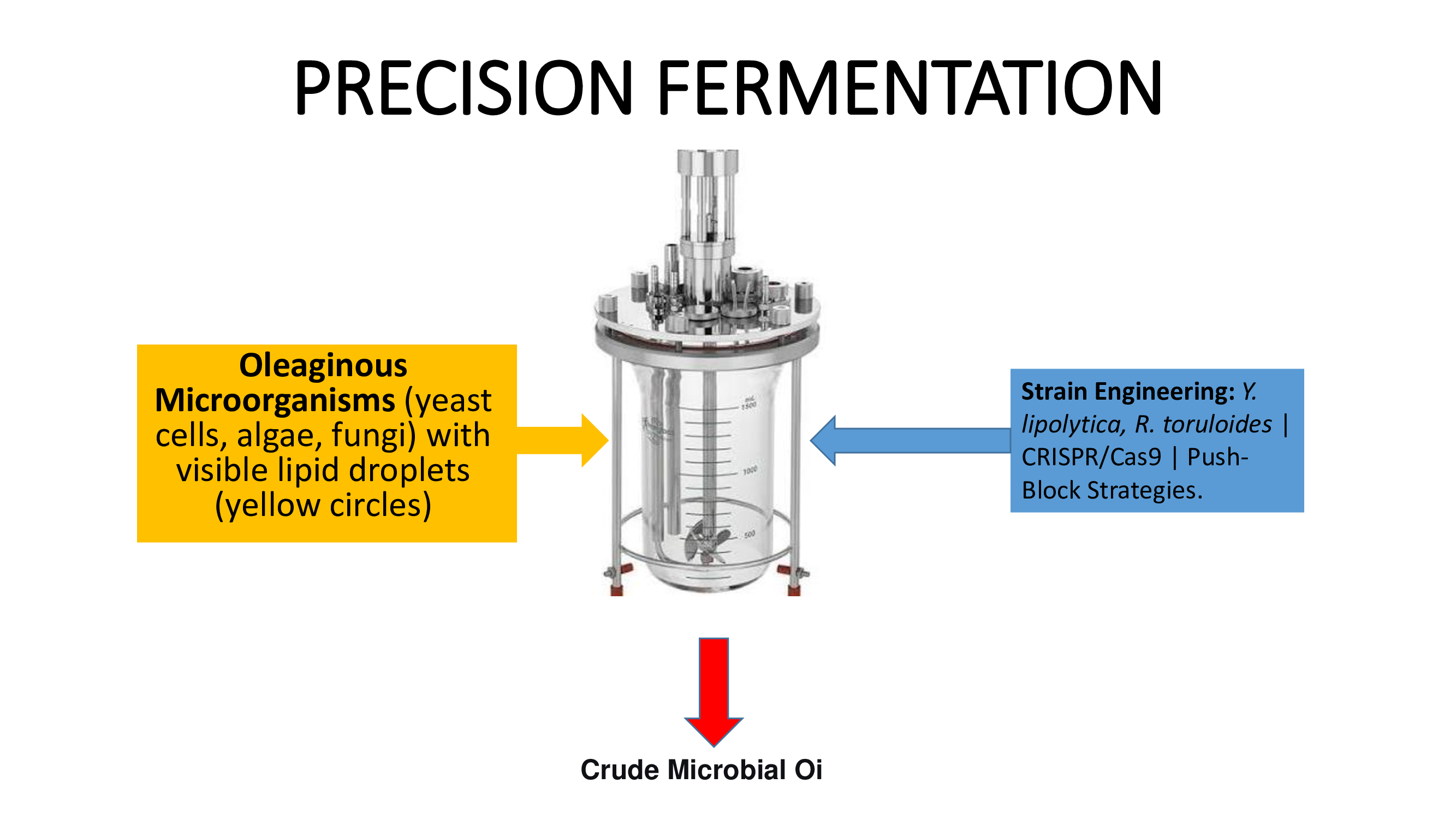
Background and Objective: Fermentation-derived fats and oils have emerged as sustainable alternatives to conventional animal and plant lipids. Oleaginous microorganisms, including yeasts, fungi, and algae, can accumulate triacylglycerols with structures similar to vegetable oils and animal fats. Advances in precision fermentation now enable tailoring of lipid profiles for nutritional and functional purposes. This review aims to examine recent progress in microbial fat production, highlight applications, and identify remaining barriers to mainstream adoption.
Search Strategy: This review synthesizes findings from recent peer-reviewed literature, focusing on strain engineering, bioprocess optimization, downstream lipid recovery, and post-fermentation modifications. Special emphasis is placed on technological innovations, regulatory considerations, and consumer perception to provide a holistic understanding of fermentation-derived fats.
Results and Conclusion: Fermentation-enabled fats demonstrate significant potential in applications such as cocoa butter equivalents, palm oil substitutes, and animal-fat analogs for plant-based meats and dairy products. These fats provide improved texture, oxidative stability, and nutritional benefits compared with traditional lipids, supported by advances in engineered yeasts, microbial oils with healthier fatty acid profiles, and pilot-scale demonstrations from industry. Nonetheless, challenges in cost reduction, scalability, regulatory approval, and consumer acceptance persist. Collectively, progress in metabolic engineering, process optimization, and post-fermentation strategies is paving the way for microbial fats to become viable, sustainable, and functional ingredients in mainstream food systems.
Downloads
References
9.1. Conflict of interest
The authors declare that they have no known competing financial interests or personal relationships that could have appeared to influence the work reported in this paper.
9.2. Author contribution
Negin Ahmadi: Conceptualization, Writing – Original Draft, Visualization, Project administration. Amirhossein Golzan: Writing – Review & Editing, Investigation, Formal analysis, Validation. Zahra Montazer: Conceptualization, Supervision, Writing – Review & Editing, Methodology, Resources.
References
[1] Mhlongo, S.I., et al., The Potential of Single-Cell Oils Derived From Filamentous Fungi as Alternative Feedstock Sources for Biodiesel Production. Frontiers in Microbiology, 2021. Volume 12 - 2021, http://doi.org.10.3389/fmicb.2021.637381.
[2] Augustin, M.A., et al., Innovation in precision fermentation for food ingredients. Critical Reviews in Food Science and Nutrition, 2024. 64(18): p. 6218-6238, http://doi.org.10.1080/10408398.2023.2166014.
[3] Uğur, Ş., B. Zieniuk, and A. Fabiszewska, Nutritional and Medicinal Properties of Microbial Oil. Applied Sciences, 2024. 14(10): p. 4232, http://doi.org.10.3390/app14104232.
[4] Konzock, O., et al., Altering the fatty acid profile of Yarrowia lipolytica to mimic cocoa butter by genetic engineering of desaturases. Microbial Cell Factories, 2022. 21(1): p. 25, http://doi.org/10.1186/s12934-022-01748-x.
[5] Parker, L., et al., Development and Production of High-Oleic Palm Oil Alternative by Fermentation of Microalgae. Fermentation, 2025. 11(4): p. 207,
[6] Lee, S.Y., M. Weingarten, and C. Ottenheim, Current upstream and downstream process strategies for sustainable yeast lipid production. Bioresource Technology, 2024. 414: p. 131601, https://doi.org/10.1016/j.biortech.2024.131601.
[7] Zbikowska, A., et al., Trends in Fat Modifications Enabling Alternative Partially Hydrogenated Fat Products Proposed for Advanced Application. Gels, 2023. 9(6): p. 453, https://doi.org/10.3390/gels9060453.
[8] Kobalter, S., T. Wriessnegger, and H. Pichler, Engineering yeast for tailored fatty acid profiles. Applied Microbiology and Biotechnology, 2025. 109(1): p. 101, http://doi.org/10.1007/s00253-025-13487-1.
[9] Winkelman, D.C. and B.J. Nikolau, The Effects of Carbon Source and Growth Temperature on the Fatty Acid Profiles of Thermobifida fusca. Front Mol Biosci, 2022. 9: p. 896226, http://doi.org/10.3389/fmolb.2022.896226.
[10] Zhang, X.-Y., et al., Production, Biosynthesis, and Commercial Applications of Fatty Acids From Oleaginous Fungi. Frontiers in Nutrition, 2022. Volume 9 - 2022, http://doi.org/10.3389/fnut.2022.873657.
[11] FoodBevMedia. Yali Bio debuts precision-fermented dairy fat alternative. 2023 Nov 20; Available from: https://www.yali.bio/press/yali-bio-debuts-precision-fermented-dairy-fat-alternative.
[12] Institue, G.F. State of the Industry Report: Fermentation—Meat, seafood, eggs, and dairy. 2023; Available from: https://gfi.org/resource/fermentation-meat-seafood-eggs-dairy-and-ingredients-state-of-the-industry/.
[13] Bahari, A. and C.C. Akoh, Texture, rheology and fat bloom study of ‘chocolates’ made from cocoa butter equivalent synthesized from illipe butter and palm mid-fraction. LWT, 2018. 97: p. 349-354, https://doi.org/10.1016/j.lwt.2018.07.013.
[14] Wang, M., et al., Advances in Metabolic Engineering of Saccharomyces cerevisiae for Cocoa Butter Equivalent Production. Frontiers in Bioengineering and Biotechnology, 2020. Volume 8 - 2020, http://doi.org/10.3389/fbioe.2020.594081.
[15] Kang, K.K., et al., Cocoa butter equivalents prepared by blending fractionated palm stearin and shea stearin. Food Science and Biotechnology, 2013. 22(2): p. 347-352, http://doi.org/10.1007/s10068-013-0087-8.
[16] Zhang, L., et al., Depiction of 2-oleic acid-1,3-saturated fatty acid triacylglycerols intended for cocoa butter equivalents from Rhodosporidium toruloides. Food Chemistry, 2025. 463: p. 141520, https://doi.org/10.1016/j.foodchem.2024.141520.
[17] Yang, H., et al., Development of symmetric monounsaturated triacylglycerols by Rhodosporidium toruloides cell factory for cocoa butter equivalent. Journal of the American Oil Chemists' Society, 2024. 101(9): p. 851-859, https://doi.org/10.1002/aocs.12836.
[18] Graham, A.E. and R. Ledesma-Amaro, The microbial food revolution. Nature Communications, 2023. 14(1): p. 2231, http://doi.org/10.1038/s41467-023-37891-1.
[19] Watson, E. Nourish Ingredients raises $28.6m to commercialize designer animal-free fats in 2023. 2022 Oct 19; Available from: https://www.foodnavigator-usa.com/Article/2022/10/19/Nourish-Ingredients-raises-28.6m-to-commercialize-designer-animal-free-fats-in-2023.
[20] Jang, J. and D.-W. Lee, Advancements in plant based meat analogs enhancing sensory and nutritional attributes. npj Science of Food, 2024. 8(1): p. 50, http://doi.org/10.1038/s41538-024-00292-9.
[21] Boukid, F., et al., Fermentation for Designing Innovative Plant-Based Meat and Dairy Alternatives. Foods, 2023. 12(5): p. 1005, http://doi.org/10.3390/foods12051005.
[22] Watson, E., ‘It’s such a clear pain point for formulators…’ Yali Bio joins race to create more ‘animal-like’ fats in meat, dairy alternatives. FoodNavigator-USA, 2022 Mar 08
[23] Michail, N. ÄIO: Fermenting fats for the future. 2023 Oct 12; Available from: https://insights.figlobal.com/fats-oils/-io-fermenting-fats-for-the-future
[24] Beek, B.v. Time-travelling Milkman Receives €550K Investment For Plant-based Dairy Fat. 2021 Jul 06; Available from: https://startlife.nl/time-travelling-milkman-receives-550k-euro-investment-for-plant-based-dairy-fat/.
[25] Vegconomist. Time-Travelling Milkman raises €850K to “cream” plant-based dairy with sustainable sunflower fat. 2024 Apr 4; Available from: https://vegconomist.com/ingredients/time-travelling-milkman-e850k-cream-plant-based-dairy-sunflower-fat/.
[26] Watson, E. Fat… the final frontier for meat alternatives? Designer fat co Lypid raises $4m to commercialize microencapsulated vegan oils that behave like animal fat. 2022 Mar 3; Available from: https://www.foodnavigator-usa.com/Article/2022/03/03/Fat-the-final-frontier-for-meat-alternatives-Designer-fat-co-Lypid-raises-4m-to-commercialize-microencapsulated-vegan-oils-that-behave-like-animal-fat
[27] Elhalis, H., et al., The potentials and challenges of using fermentation to improve the sensory quality of plant-based meat analogs. Frontiers in Microbiology, 2023. Volume 14 - 2023, http://doi.org.10.3389/fmicb.2023.1267227.
[28] Mridul, A. Butter or Crock? Dairy Industry Asks FDA to Crack Down on Plant-Based Alternative. 2025 Jul 11; Available from: https://www.greenqueen.com.hk/country-crock-homestyle-dairy-free-butter-label-fda/.
[29] Southey, F. Palm oil alternative made from fermented yeast prepares for 2023 launch in Europe. 2022 Aug 03; Available from: https://www.foodnavigator.com/Article/2022/08/03/palm-oil-alternative-made-from-fermented-yeast-prepares-for-2023-launch-in-europe/.
[30] Saini, R., et al., Evaluating the Potential of Rhodosporidium toruloides-1588 for High Lipid Production Using Undetoxified Wood Hydrolysate as a Carbon Source. Energies, 2020. 13(22): p. 5960, http://doi.org/10.3390/en13225960.
[31] Southey, F. Beef-like fat prototype produced via precision fermentation: ‘It’s a ground-breaking step towards making plant-based meat tastier’. 2022 May 05; Available from: https://www.foodnavigator.com/Article/2022/05/05/Beef-like-fat-prototype-produced-via-precision-fermentation-It-s-a-ground-breaking-step-towards-making-plant-based-meat-tastier/.
[32] Gerlei, M., et al., Chemical Composition and Crystallization Behavior of Oil and Fat Blends for Spreadable Fat Applications. Foods, 2024. 13(20): p. 3305, http://doi.org/10.3390/foods13203305.
[33] Singh, P.K., et al., Enzymatic Interesterification of Vegetable Oil:A Review on Physicochemical and Functional Properties, and Its Health Effects. Journal of Oleo Science, 2022. 71(12): p. 1697-1709, http://doi.org/10.5650/jos.ess22118.
[34] Vila-Clarà, G., et al., Exploring the Role and Functionality of Ingredients in Plant-Based Meat Analogue Burgers: A Comprehensive Review. Foods, 2024. 13(8): p. 1258, http://doi.org/10.3390/foods13081258.
[35] Panescu, P., Research on animal-free fats presents un-fat-homable possibilities for meat alternatives. Good Food Institiute, 2022 Jul 21,
[36] Yow, A. Fat authenticity key to alt-protein revival, says Nourish Ingredients. 2025 Jun 05; Available from: https://www.foodnavigator-asia.com/Article/2025/06/05/fat-authenticity-key-to-alt-protein-revival.
[37] Watson, E. Designer fats in focus: does it make commercial sense to produce fats via precision fermentation? 2023 Dec 15; Available from: https://agfundernews.com/designer-fats-in-focus-does-it-make-commercial-sense-to-produce-fats-via-precision-fermentation.
[38] Rigouin, C., et al., Increasing medium chain fatty acids production in Yarrowia lipolytica by metabolic engineering. Microbial Cell Factories, 2018. 17(1): p. 142, http://doi.org/10.1186/s12934-018-0989-5.
[39] Marella, E.R., et al., Engineering microbial fatty acid metabolism for biofuels and biochemicals. Current Opinion in Biotechnology, 2018. 50: p. 39-46, https://doi.org/10.1016/j.copbio.2017.10.002.
[40] Zhang, S., et al., Engineering Rhodosporidium toruloides for increased lipid production. Biotechnology and Bioengineering, 2016. 113(5): p. 1056-1066, https://doi.org/10.1002/bit.25864.
[41] Park, K. and J.-S. Hahn, Engineering Yarrowia lipolytica for sustainable ricinoleic acid production: A pathway to free fatty acid synthesis. Metabolic Engineering, 2024. 81: p. 197-209, https://doi.org/10.1016/j.ymben.2023.12.002.
[42] Cao, L., et al., Engineering Yarrowia lipolytica to produce nutritional fatty acids: Current status and future perspectives. Synthetic and Systems Biotechnology, 2022. 7(4): p. 1024-1033, https://doi.org/10.1016/j.synbio.2022.06.002.
[43] Shi, S. and H. Zhao, Metabolic Engineering of Oleaginous Yeasts for Production of Fuels and Chemicals. Frontiers in Microbiology, 2017. Volume 8 - 2017, http://doi.org/10.3389/fmicb.2017.02185.
[44] Rezaee-Ahary, S.R., F. Tarlak, and K. Khosravi-Darani, Biotechnology Solution to Overcome Global Concern of Iron Deficiency. BiotechIntellect, 2025. 1(1): p. e1(1-9), 10.61882/BiotechIntellect.1.1.12.
[45] Montazer, Z., R. Munir, and K. Khosravi-Darani, Fermentation-derived fats and oils: from Engineering Strategies to Emerging Technology: single cell oil and fat production. BiotechIntellect, 2025. 2(1): p. e7 (1-12), 10.61882/BiotechIntellect.2.1.23.
[46] Schultz, J.C., et al., Metabolic engineering of Rhodotorula toruloides IFO0880 improves C16 and C18 fatty alcohol production from synthetic media. Microbial Cell Factories, 2022. 21(1): p. 26, http:doi.org/10.1186/s12934-022-01750-3.
[47] Wang, Y., et al., Overexpression of Δ12-Fatty Acid Desaturase in the Oleaginous Yeast Rhodosporidium toruloides for Production of Linoleic Acid-Rich Lipids. Applied Biochemistry and Biotechnology, 2016. 180(8): p. 1497-1507, http://doi.org/10.1007/s12010-016-2182-9.
[48] Lee, J.W., et al., Engineering xylose metabolism in yeasts to produce biofuels and chemicals. Current Opinion in Biotechnology, 2021. 67: p. 15-25, https://doi.org/10.1016/j.copbio.2020.10.012.
[49] Singh Jadaun, J., et al., Biodegradation of plastics for sustainable environment. Bioresource Technology, 2022. 347: p. 126697, https://doi.org/10.1016/j.biortech.2022.126697.
[50] Liu, D., et al., Exploiting nonionic surfactants to enhance fatty alcohol production in Rhodosporidium toruloides. Biotechnology and Bioengineering, 2020. 117(5): p. 1418-1425, https://doi.org/10.1002/bit.27285.
[51] Krishnan, A., B.A. McNeil, and D.T. Stuart, Biosynthesis of Fatty Alcohols in Engineered Microbial Cell Factories: Advances and Limitations. Front Bioeng Biotechnol, 2020. 8: p. 610936, http://doi.org/10.3389/fbioe.2020.610936.
[52] Kim, J., et al., Lipid extract derived from newly isolated Rhodotorula toruloides LAB-07 for cosmetic applications. Computational and Structural Biotechnology Journal. 21: p. 2009-2017, http://doi.org/10.1016/j.csbj.2023.03.018.
[53] Heo, S., et al., Current status of the novel food ingredient safety evaluation system. Food Science and Biotechnology, 2024. 33(1): p. 1-11, http://doi.org/10.1007/s10068-023-01396-w.
[54] Union, E. REGULATION (EU) No 1308/2013 OF THE EUROPEAN PARLIAMENT AND OF THE COUNCIL. Official Journal of the European Union 17 Dec 2013 [cited 347; 671-854]. Available from: https://eur-lex.europa.eu/eli/reg/2013/1308/oj.
[55] Mukherjee, A., et al., Global Regulatory Frameworks for Fermented Foods: A Review. Frontiers in Nutrition, 2022. Volume 9 - 2022, http://doi.org/10.3389/fnut.2022.902642.
[56] Commission, E. amending Implementing Regulation (EU) 2017/2470 as regards the conditions of use of the novel
food Schizochytrium sp. oil rich in DHA and EPA Official Journal of the European Union 05 Aug 2022 [cited 205; 230-233]. Available from: https://eur-lex.europa.eu/legal-content/EN/TXT/PDF/?uri=CELEX:32022R1365.
[57] Mukherjee, S., et al., Microbial polyunsaturated fatty acids (PUFAs) for human health: A comprehensive review of evidence from in vivo preclinical models. Discover Applied Sciences, 2024. 6(10): p. 524, http://doi.org/10.1007/s42452-024-06238-w.
[58] Cheng, S., et al., Functional butter for reduction of consumption risk and improvement of nutrition. Grain & Oil Science and Technology, 2023. 6(4): p. 172-184, https://doi.org/10.1016/j.gaost.2023.09.001.
[59] Varmira, K., et al., Non-clinical Safety Evaluation of Camelina Oil: Acute and 12-Week Oral Toxicities. Iran J Pharm Res, 2024. 23(1): p. e140666, http://doi.org/10.5812/ijpr-140666.
[60] Jonker, D., et al., Safety assessment of rhamnogalacturonan-enriched carrot pectin fraction: 90-Day oral toxicity study in rats and in vitro genotoxicity studies. Food and Chemical Toxicology, 2020. 139: p. 111243, https://doi.org/10.1016/j.fct.2020.111243.
[61] Szabo, N.J., et al., Safety evaluation of oleic-rich triglyceride oil produced by a heterotrophic microalgal fermentation process. Food and Chemical Toxicology, 2014. 65: p. 301-311, https://doi.org/10.1016/j.fct.2013.12.048.
[62] Mamat, U., et al., Endotoxin-free protein production—ClearColi™ technology. Nature Methods, 2013. 10(9): p. 916-916, http://doi.org/10.1038/nmeth.f.367.
[63] EFSA Panel on Food Contact Materials, E., et al., Scientific Guidance for the submission of dossiers on Food Enzymes. EFSA Journal, 2021. 19(10): p. e06851, https://doi.org/10.2903/j.efsa.2021.6851.
[64] P., C., J. S., and A. M. Residual protein and potential allergenicity in processed products from allergenic source materials. 2011; Available from: https://www.mpi.govt.nz/dmsdocument/22417-Residual-protein-and-potential-allergenicity-2010-2011.
[65] (SCCS), S.C.o.C.S. Opinion on peanut oil (sensitisation only). 2014 Sep 23; Available from: https://ec.europa.eu/health/scientific_committees/consumer_safety/docs/sccs_o_155.pdf?utm_source=chatgpt.com.
[66] (FAO), F.a.A.O.o.t.U.N. Risk assessment of food allergens: part 4: establishing exemptions from mandatory declaration for priority food allergens: meeting report. 26 Feb 2024; Available from: https://www.who.int/publications/i/item/9789240088924.
[67] Mullins, E., et al., Statement complementing the EFSA Scientific Opinion on the assessment of genetically modified oilseed rape MS11 for food and feed uses, import and processing, under Regulation (EC) No 1829/2003 (application EFSA-GMO-BE-2016-138). Efsa j, 2022. 20(3): p. e07190, 10.2903/j.efsa.2022.7190.
[68] Efsa Panel on Dietetic Products, N., et al., Guidance on the preparation and submission of an application for authorisation of a novel food in the context of Regulation (EU) 2015/2283 (Revision 1)2. 2023, http://doi.org/10.2903/j.efsa.2021.6555.
[69] (FDA), U.S.F.a.D.a. Inventory of Notifications Received under 21 U.S.C. 343(w)(7) for Exemptions from Food Allergen Labeling. 03/07/2022; Available from: https://www.fda.gov/food/nutrition-food-labeling-and-critical-foods/inventory-notifications-received-under-21-usc-343w7-exemptions-food-allergen-labeling.
[70] European Food Safety, A., Opinion of the Scientific Panel on Dietetic products, nutrition and allergies [NDA] related to a notification from FEDIOL and IMACE on fully refined soybean oil and fat pursuant to Article 6 paragraph 11 of Directive 2000/13/EC. EFSA Journal, 2004. 2(12): p. 147, https://doi.org/10.2903/j.efsa.2004.147.
[71] Mirsalami, S.M. and M. Mirsalami, Advances in genetically engineered microorganisms: Transforming food production through precision fermentation and synthetic biology. Future Foods, 2025. 11: p. 100601, https://doi.org/10.1016/j.fufo.2025.100601.
[72] Karmaus, A.L. and W. Jones, Future foods symposium on alternative proteins: Workshop proceedings. Trends in Food Science & Technology, 2021. 107: p. 124-129, https://doi.org/10.1016/j.tifs.2020.06.018.
[73] Eastham, J.L. and A.R. Leman, Precision fermentation for food proteins: ingredient innovations, bioprocess considerations, and outlook — a mini-review. Current Opinion in Food Science, 2024. 58: p. 101194, https://doi.org/10.1016/j.cofs.2024.101194.
[74] Lee, S.Y., et al., Current technologies, regulation, and future perspective of animal product analogs - A review. Anim Biosci, 2023. 36(10): p. 1465-1487, http://doi.org/10.5713/ab.23.0029.
[75] Leialohilani, A. and A. de Boer, EU food legislation impacts innovation in the area of plant-based dairy alternatives. Trends in Food Science & Technology, 2020. 104: p. 262-267, https://doi.org/10.1016/j.tifs.2020.07.021.
[76] Craig, W.J., et al., Plant-Based Dairy Alternatives Contribute to a Healthy and Sustainable Diet. Nutrients, 2023. 15(15): p. 3393, http://doi.org/10.3390/nu15153393.
[77] Liu, Y., W.R. Aimutis, and M. Drake, Dairy, Plant, and Novel Proteins: Scientific and Technological Aspects. Foods, 2024. 13(7): p. 1010, http://doi.org/10.3390/foods13071010.
[78] Liu, X., et al., New food sources and production systems: a comparison of international regulations and China’s advancements in novel foods with synthetic biology. Food Science and Human Wellness, 2024. 13(5): p. 2519-2542, http://doi.org/10.26599/FSHW.2022.9250253.
[79] Zeltzer, P., D. Moyer, and T. Philibeck, Graduate Student Literature Review: Labeling challenges of plant-based dairy-like products for consumers and dairy manufacturers. Journal of Dairy Science, 2022. 105(12): p. 9488-9495, https://doi.org/10.3168/jds.2022-21924.
[80] Chen, H. and Y. Wu, Risk Assessment of Food Allergens. China CDC Weekly, 2022. 4(34): p. 771-774, 10.46234/ccdcw2022.163.
[81] Grundy, H.a.R., M. Rosario and Brown, Lucy C. and Parker, Marc, Review of methods for the detection of allergens in novel food alternative proteins. FSA Research and Evidence, 2024, https://doi.org/10.46756/001c.125903.
[82] Liu, X., et al., Enzymatic synthesis of structured lipids rich in α-linolenic acid: impacts of triacylglycerol profile on physicochemical characteristics. International Journal of Food Science & Technology, 2024. 59(10): p. 7301-7313, https://doi.org/10.1111/ijfs.17457.
[83] Banovic, M. and K.G. Grunert, Consumer acceptance of precision fermentation technology: A cross-cultural study. Innovative Food Science & Emerging Technologies, 2023. 88: p. 103435, https://doi.org/10.1016/j.ifset.2023.103435.
[84] Kühl, S., et al., Beyond the cow: Consumer perceptions and information impact on acceptance of precision fermentation-produced cheese in Germany. Future Foods, 2024. 10: p. 100411, https://doi.org/10.1016/j.fufo.2024.100411.
[85] Banovic, M., D. Asioli, and G. Sogari, Cross-cultural consumer valuation of precision fermentation milk: Effects of information, individual traits, and labelling preferences. Food Quality and Preference, 2025. 131: p. 105570, https://doi.org/10.1016/j.foodqual.2025.105570.
[86] Günden, C., et al., Consumer Response to Novel Foods: A Review of Behavioral Barriers and Drivers. Foods, 2024. 13(13): p. 2051,
[87] Karamerou, E.E., et al., Using techno-economic modelling to determine the minimum cost possible for a microbial palm oil substitute. Biotechnol Biofuels, 2021. 14(1): p. 57, http://doi.org/10.1186/s13068-021-01911-3.
[88] Abeln, F. and C.J. Chuck, The history, state of the art and future prospects for oleaginous yeast research. Microbial Cell Factories, 2021. 20(1): p. 221, 10.1186/s12934-021-01712-1.
[89] Wang, R., et al., Oil production by the oleaginous yeast Lipomyces starkeyi using diverse carbon sources. BioResources, 2014. 9(4): p. 7027-7040,
[90] Guo, B., et al., A Natural Gas Fermentation Bacterial Meal (FeedKind®) as a Functional Alternative Ingredient for Fishmeal in Diet of Largemouth Bass, Micropterus salmoides. Antioxidants, 2022. 11(8): p. 1479,
[91] Abeln, F. and C.J. Chuck, Achieving a high-density oleaginous yeast culture: Comparison of four processing strategies using Metschnikowia pulcherrima. Biotechnol Bioeng, 2019. 116(12): p. 3200-3214, 10.1002/bit.27141.
[92] Lee, S.-J. and D.-M. Kim, Cell-Free Synthesis: Expediting Biomanufacturing of Chemical and Biological Molecules. Molecules, 2024. 29(8): p. 1878,
[93] Arbter, P., et al., Redox governed electro-fermentation improves lipid production by the oleaginous yeast Rhodosporidium toruloides. Bioresource Technology, 2019. 294: p. 122122, https://doi.org/10.1016/j.biortech.2019.122122.
[94] Ghasemi Naghdi, F., et al., Progress on lipid extraction from wet algal biomass for biodiesel production. Microb Biotechnol, 2016. 9(6): p. 718-726, http://doi.org/10.1111/1751-7915.12360.
[95] Masri, M.A., et al., A sustainable, high-performance process for the economic production of waste-free microbial oils that can replace plant-based equivalents. Energy & Environmental Science, 2019. 12(9): p. 2717-2732, https://doi.org/10.1039/C9EE00210C.
[96] Castellini, M., et al., Techno-Economic Analysis of Biodiesel Production from Microbial Oil Using Cardoon Stalks as Carbon Source. Energies, 2021. 14(5): p. 1473,
[97] Silva, J.d.M.e., et al., Microbial Lipid Based Biorefinery Concepts: A Review of Status and Prospects. Foods, 2023. 12(10): p. 2074, http://doi.org/10.3390/foods12102074.
[98] Al Shehhi, A., et al., Microbial lipid-based biodiesel production using wastewater: opportunities and challenges. Bioresources and Bioprocessing, 2025. 12(1): p. 70, 10.1186/s40643-025-00897-2.
[99] Fabiszewska, A., et al., Unconventional Extraction Methods of Oleaginous Yeast Cell Pretreatment and Disruption. Applied Sciences, 2023. 13(24): p. 13135, http://doi.org/10.3390/app132413135.
[100] Yuan, R., et al., Artificial oil bodies: A review on composition, properties, biotechnological applications, and improvement methods. Food Chemistry: X, 2024. 21: p. 101109, https://doi.org/10.1016/j.fochx.2023.101109.
[101] Umayangani, S., et al., Elimination of Trans Fatty Acids from Foods Using Novel Technologies. Food Reviews International, 2026. 42(2): p. 802-830, 10.1080/87559129.2025.2502439.
[102] Bandara, R.R., et al., Enzymatic Interesterification of Coconut and Hemp Oil Mixtures to Obtain Modified Structured Lipids. Foods, 2024. 13(17), 10.3390/foods13172722.
[103] Hilgendorf, K., et al., Precision fermentation for improving the quality, flavor, safety, and sustainability of foods. Current Opinion in Biotechnology, 2024. 86: p. 103084, https://doi.org/10.1016/j.copbio.2024.103084.
[104] Gumulya, Y., et al., Advancing Australia’s food future: Opportunities and challenges in precision fermentation. Future Foods, 2025. 11: p. 100630, https://doi.org/10.1016/j.fufo.2025.100630.
[105] Yee, C.S., et al., Smart Fermentation Technologies: Microbial Process Control in Traditional Fermented Foods. Fermentation, 2025. 11(6): p. 323,
[106] Priyadharshini, D., et al., Precision to plate: AI-driven innovations in fermentation and hyper-personalized diets. Frontiers in Nutrition, 2025. Volume 12 - 2025, 10.3389/fnut.2025.1659511.
[107] Knychala, M.M., et al., Precision Fermentation as an Alternative to Animal Protein, a Review. Fermentation, 2024. 10(6): p. 315,

Downloads
Published
Submitted
Revised
Accepted
Issue
Section
License
Copyright (c) 2025 Negin Ahmadi, Amirhossein Golzan (Author); Zahra Montazer

This work is licensed under a Creative Commons Attribution-NonCommercial 4.0 International License.