
An Amperometric Biosensor Based on Cytochrome C Immobilized on a Gold Electrode for Detection of Dissolved Hydrogen Sulfide
Cytochrome C biosensor for dissolved H2S Detection
DOI:
https://doi.org/10.66224/BiotechIntellect.3.1.53Abstract
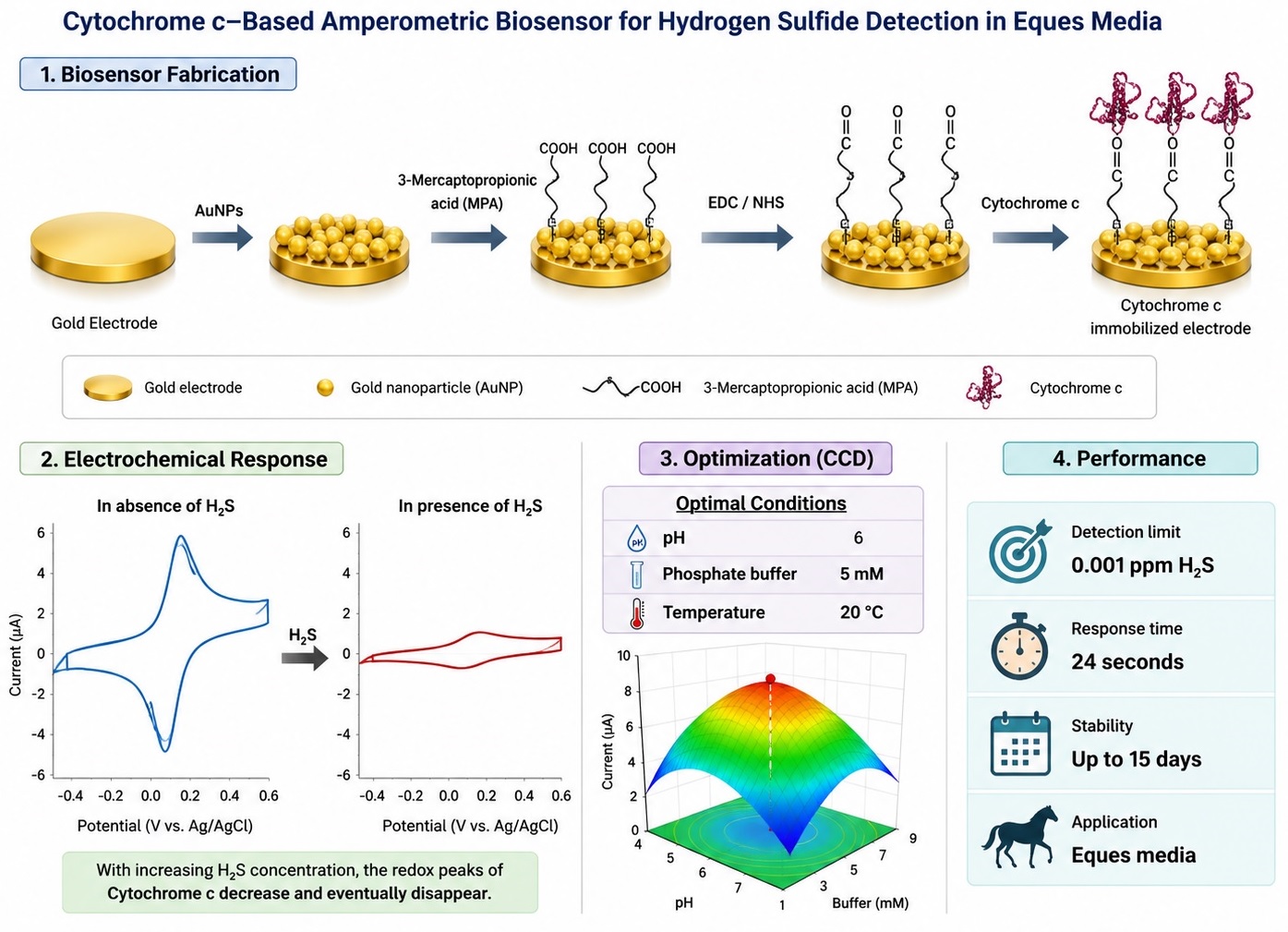
Background and aims: Cytochrome C, a metalloprotein, can play the role of electron transporter electrochemically. In the present work, an amperometric biosensor for the detection of hydrogen sulfide in aqueous media has been fabricated by immobilizing Cytochrome C on the surface of gold electrode.
Materials and Methods: The surface was modified by nanoparticle and self-assemble monolayer of 3- mercaptopropionic acid. 1-(3-DimethylAminoPropyl)-3-EthylCarboDiimide Methiodide (EDC) and N-hydroxysuccinimide (NHS) were applied as coupling reagents for covalent attachment of Cytochrome C on modified gold electrode surface.
Results and Conclusion: Experimental design based on Central Composite Design (CCD) method revealed the optimal condition for current peak at pH 6, 5 mM phosphate buffer and 20 °C. In the presence of hydrogen sulfide in electrolyte, oxidation and reduction peaks reduced and over time were completely vanished. Under the investigated aqueous conditions, the lowest tested H₂S concentration was 0.001 ppm, and a rapid amperometric response was observed. The electrode response remained observable during the investigated 15-day period.
Downloads
Downloads
Publication Timeline
- Submitted
- Revised
- Accepted
Issue
Section
License
Copyright (c) 2026 Soraya Bahari (Author); Fatemeh Yazdian, Ashrafsadat Hatamian-Zarmi; Majid Kalatebojdi, Nima Ghahremani Nezhad (Author)

This work is licensed under a Creative Commons Attribution-NonCommercial 4.0 International License.